
Idukki vs Syncly vs Emplifi UGC: finding customer content, managing it, or selling with it
Syncly listens inside social video. Emplifi UGC is one module of an enterprise CX suite. Idukki turns customer content into shoppable galleries on your store. A side-by-side comparison, with a table and sources. We make Idukki.

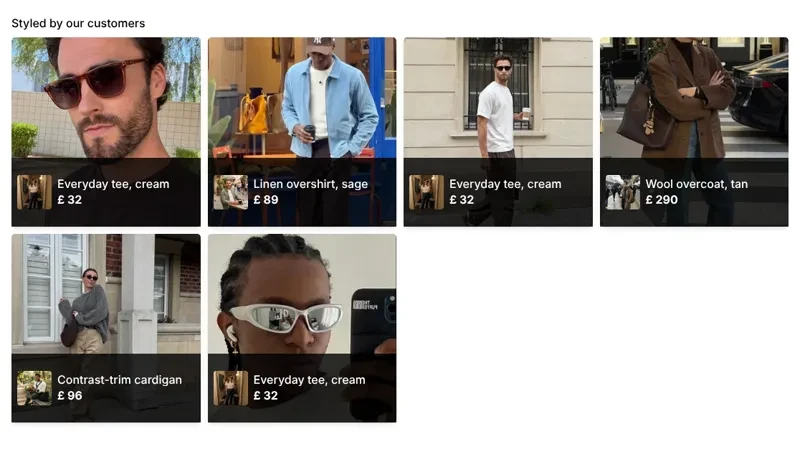
A customer's TikTok shows your product used in a way your team never thought of. It never tagged the brand. Two questions follow, and they belong to different tools. How do you find more of these? And how does this one reach the product page, with permission, beside a buy button? Syncly answers the first. Emplifi answers a version of both inside a much bigger suite. We answer the second.
In this article
These three tools turn up in the same searches because they all touch "UGC". But they sit at different points in the life of a customer post. Content gets found, then collected and cleared, then shown to a shopper, then measured against orders. Syncly lives at the start of that line. Emplifi covers the middle as part of a broader social suite. Idukki covers collection through to the order. We make Idukki; the other two columns come from their own pages.
Where each tool sits in the life of a customer post
- 01
Find
Spot posts about the brand, including ones that never tagged it.
Syncly
- 02
Collect and clear
Bring the post in and record the creator's permission.
Emplifi, Idukki
- 03
Show and sell
Put it on the product page with the product tagged to the cart.
Idukki
- 04
Measure
Tie the post to orders. Views alone are not enough.
Idukki; Emplifi measures campaigns
How do Idukki, Syncly and Emplifi UGC compare?
| Idukki (ours) | Syncly | Emplifi UGC | |
|---|---|---|---|
| Primary job | Display customer content and sell from it | Video social listening and creator intelligence | Collect and reuse UGC inside a CX suite |
| Finds untagged mentions in video | No: collects from connected accounts and hashtags | Yes: speech-to-text and visual AI on TikTok, Reels, Shorts | Not shown on its UGC page |
| Shows content on your store | Yes: galleries, reels, stories | No display layer | Not shown on its UGC page |
| Product tagging and add to cart | Yes, tagged products to cart | No | Not shown on its UGC page |
| Permission to reuse | Consent recorded per post | No | Permission requests in the platform |
| Measures against orders | Yes, anchored on the store order webhook | Tracks TikTok Shop creator sales signals | Measures campaign impact |
| How it is sold | Published plans, free to $200 a month; Enterprise custom | Not published; free trial | Sales-led; module pricing not published |
| Built for | Ecommerce and marketing teams | Brand, insights and CX teams | Enterprise social and CX teams |
Finding against selling
Syncly: the finder
Syncly started as a customer-feedback analytics company (Y Combinator, Winter 2023). It now leads with "AI social intelligence for the video era". The useful idea is listening inside the video instead of the caption. It transcribes what people say, reads text overlays and detects logos and products in frames. So it can surface mentions that never tag the brand. Syncly says those are most of them. It also profiles creators already talking about your category. And it tracks which ones drive TikTok Shop sales signals.
What it does not do is the second half. There is no widget, no gallery and no store integration. A video found in Syncly still needs permission and a product tag. It also needs a place on the page. Syncly is simply a different product. Pricing is not published, and a free trial is available.
Emplifi UGC: the suite module
Emplifi sells an eleven-product "Autonomous CX" suite. It includes publishing, listening, care, ratings and reviews, influencers, community and a UGC Platform. Emplifi claims more than 20,000 brands across the suite. The UGC page frames the problem as content supply ("scale content beyond internal resources"). It lists collecting images, video, reviews and social posts. It also lists permission requests in the platform, tagging content and measuring campaigns.
The UGC page does not show product tagging, checkout from a gallery or a Shopify listing. The stats on it are Emplifi's own, with no named study behind them. So we do not repeat them. Does your organisation already run Emplifi for social and care? Then the module is worth evaluating with the team you already have. For a store looking for a UGC tool, it is priced and sold for someone else. More on the Emplifi comparison page.
Emplifi shipped its Autumn Release on 6 October 2026. Fuel AI gained agentic workflows across social, care, listening and analytics. Dashboards can now be built from a plain-language prompt. AI query highlights summarise listening results. Emplifi now says it serves more than 22,000 brands. The release lists no changes to UGC galleries or checkout, so the table above stands.
Idukki: the seller (ours)
Idukki starts from the product page. Content comes in from Instagram, TikTok, YouTube, X, LinkedIn, Threads, Facebook and Pinterest. It also comes from hashtag campaigns and review sources: Google, Trustpilot, TripAdvisor and Judge.me. Each post carries its consent. A vision model tags its products. Confident matches apply themselves, and the rest wait for a person. The post renders as a shoppable gallery, reel or story. Orders are attributed from the store's own order webhook, so the report reads in orders. The page on how order-anchored attribution works explains why that matters.
Where Syncly is ahead of us: finding untagged mentions inside video. We collect from connected accounts and hashtags. We do not transcribe what people say in a clip. If discovery is your bottleneck, Syncly and Idukki are a sensible pair rather than a choice.
Syncly
Listens inside social video.
Wins at
- Untagged mentions in video
- Speech and on-screen text
- Creator intelligence
Struggles with
- No display layer
- No store integration
- Pricing not published
Emplifi UGC
A module in an enterprise suite.
Wins at
- Part of a wide CX suite
- Permission requests
- Campaign measurement
Struggles with
- No product tagging shown
- No store checkout shown
- Sales-led pricing
Idukki
Customer content that sells on your store.
Wins at
- Shoppable galleries, reels, stories
- Consent per post
- Order-anchored attribution
Struggles with
- No in-video listening
- Not a full CX suite
Our reading of each vendor's own pages. Idukki is ours.
Sources
- 1Syncly · Video social listening, checked July 2026.
- 2Emplifi · UGC Platform product page, checked August 2026.
- 3PR Newswire: Emplifi Autumn Release (6 Oct 2026) · Fuel AI workflows, Dynamic Boards, listening. Read 13 October 2026.
- 4Idukki vs Emplifi · Feature matrix.
- 5Idukki: best UGC platforms for Shopify in 2026 · The wider field, sorted by job.
Continue reading
3 pieces in this clusterMore on this topic. Each of these articles links back here.
- Buyer's guides
The best UGC platforms for ecommerce brands in 2026: eight compared for multi-site teams
Eight UGC platforms for brands on Salesforce Commerce Cloud, Adobe Commerce, BigCommerce, Shopify Plus or headless. Store platforms, rights, SSO, hosting, API and price, each from the vendor's own pages. We make Idukki.
- Buyer's guides
How to choose a UGC gallery app: ten questions to ask before you install
A buyer's checklist for UGC gallery apps. Sources, product tagging, rights, moderation and page weight. Measurement, pricing shape, platforms, exit and support. With a decision tree and the demo questions that expose a weak app.
- Buyer's guides
The Best UGC, Shoppable Video & Reviews Platforms in 2026: A Buyer's Hub
A neutral buyer's guide that sorts the UGC, shoppable-video and reviews field by what each platform is actually for, with an honest head-to-head linked for every vendor.
More from Rohin Aggarwal
- Buyer's guides
Idukki vs Tolstoy: shoppable video compared
Tolstoy bills by video viewers and leads on AI creative, TikTok Shop and Meta. Idukki bills by impressions and adds photos, reviews, rights and proven sales. We make Idukki.
- Buyer's guides
The best Taggbox alternatives in 2026: six tools for social feeds and UGC
EmbedSocial, Curator, Juicer, Flockler, Covet.pics and Idukki compared with Taggbox. What each bill counts, free plans, product tags, review sources and rights requests. We make Idukki.
- Buyer's guides
Taggbox vs Flowbox vs EmbedSocial in 2026: sources, product tags, rights and price side by side
Taggbox, Flowbox and EmbedSocial on sources, product tags, rights requests, AI, platforms and price. Idukki sits in a fourth column. We make Idukki.