
Fashion + Designer Wear
 Verb by Pallavi Singhee
Designer wear shown on real customers put ₹196K into carts in 3 months
₹19.5KProven revenue
Reach, not a lift claim
What changed
- ₹19.5KProven revenueOrders where the shopper added the product to cart from the widget before buying
- 1Proven ordersPurchases that followed a widget add-to-cart
- 41Add-to-carts from the widgetProducts added to cart straight from customer content
- Widget impressions
- 120K
- Visitors reached
- 59,058
- Click rate
- 4.34%
- Live galleries
- 7
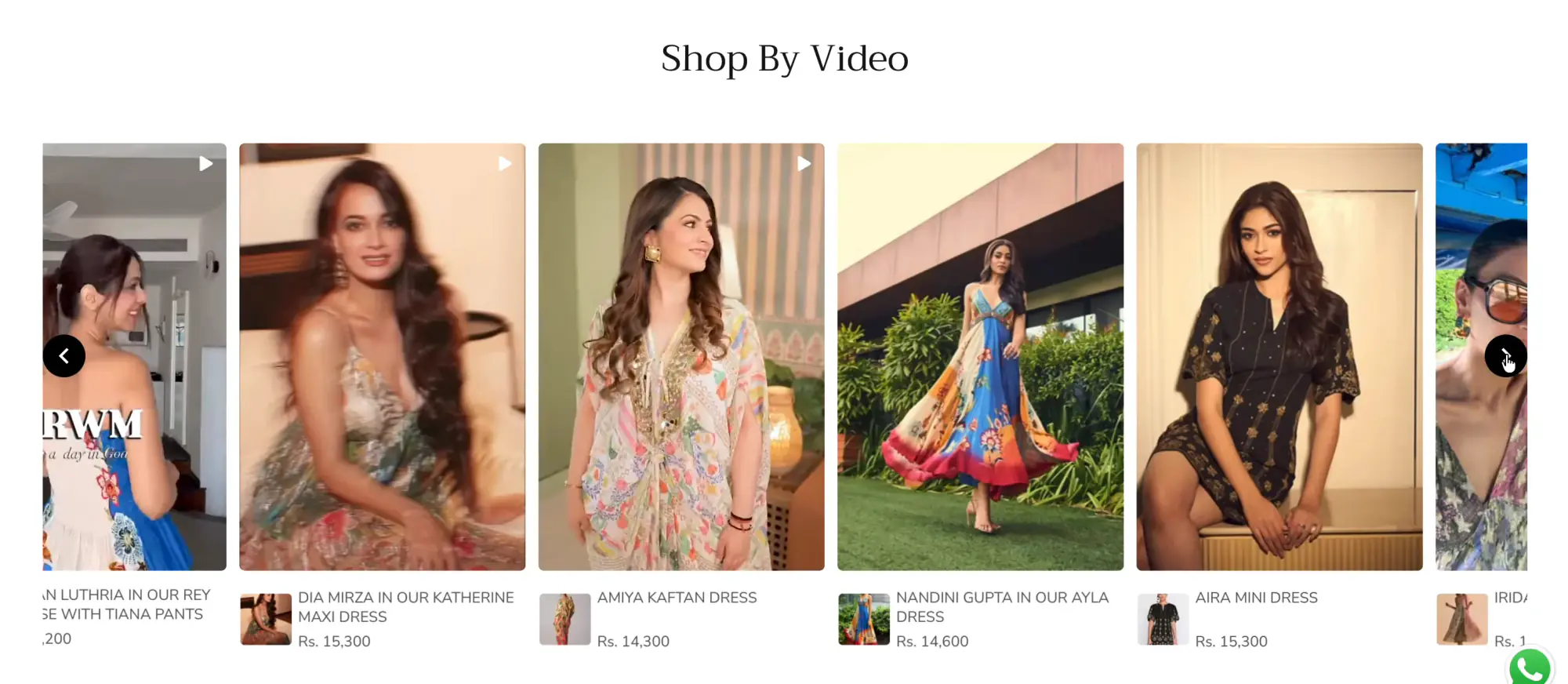
Verb runs a shoppable Instagram UGC wall on its homepage and a mini-frame on product pages, on both its rupee and US-dollar stores at wearverb.com. In 3 months the galleries were shown 120K times, and shoppers added 41 pieces to cart straight from customer content: ₹196K of cart value on the India store alone, with $6.7K more on the international store.
About Verb by Pallavi Singhee
Verb is the luxury womenswear label of designer Pallavi Singhee, mixing tradition with modern silhouettes in dresses, resort wear, co-ord sets and kaftans. It sells worldwide at wearverb.com.
The problem
Luxury occasion wear is a high-ticket purchase made online without trying the piece on. Shoppers want to see how it moves and fits on real women, not only on a runway model.
What they set up
- 1Launched a shoppable Instagram UGC wall on the homepage.
- 2Added a mini-frame on product pages so customer content sits beside the price.
- 3Ran one tagged content library across both stores.
The results
Proven revenue: ₹19.5K (Orders where the shopper added the product to cart from the widget before buying). Proven orders: 1 (Purchases that followed a widget add-to-cart). Add-to-carts from the widget: 41 (Products added to cart straight from customer content). Cart value from the widget: ₹196K (Value of those add-to-carts: buying intent, not revenue).
Why it worked
Designer pieces carry designer prices, so every add-to-cart is worth a lot. Showing those pieces on real customers, at the occasions they were bought for, gives a shopper the confidence to spend. Running the same tagged library across both stores means the newer store had the same proof from its first day.
How it’s measured
- Evidence
- Reach, not a lift claim
- Method
- Idukki widget analytics. Proven revenue and orders count purchases where the shopper added the product to cart from the widget first. Cart value is the value of widget add-to-carts and is never added to revenue. These are the same definitions the merchant dashboard uses.
- Window
- Lifetime: June 2026 to September 2026 (3 months live)
- Source
- Idukki production analytics, refreshed 2026-10-22
- What it does not prove
- Proven revenue is a floor, not the whole effect: it counts only orders where the shopper added to cart from the widget first. Orders from shoppers who saw the content and bought another way are not in it. The India store reports in rupees and the international store in US dollars; cart value shown is the India store only, counts cover both.
Stack
- Idukki inspiration wall
- PDP mini-frame
- Product tagging
- Multi-store
Want a result like this?