
 PL
PL  EN
EN  ES
ES  FR
FR  DE
DE  NL
NL  IT
IT Learn How UGC Became a Game Changer for these 5 Luxury Fashion Brands
In This Article
Fashion isn’t about chasing impossible standards anymore. It’s about dressing how you feel. Gone are the days of those super-glossy, high-fashion ads that felt too unrealistic for common people. Nobody trusts them anymore.
So, where do people look? To each other.
They’re looking at their friends’ photo dumps. They’re scrolling TikTok for fit checks and #OOTD. They’re looking for proof. Real-life fashion styling from real people.
We call this content User-Generated Content, or UGC, and it’s the talk of the marketing town! It’s honest. It’s trustworthy. And it’s the reason some brands feel like a community while others just feel like a corporation.
Want to see how it’s done right? Good. Let’s look at the brands that have aced the magic of UGC for their brands.
1. ASOS (UK): They Turned Their Shop into a Lookbook
ASOS has a bazillion things for sale. A sea of clothes. How do you convince someone to buy that one specific thing? You show them it looks good on someone just like them.
What they did that worked:
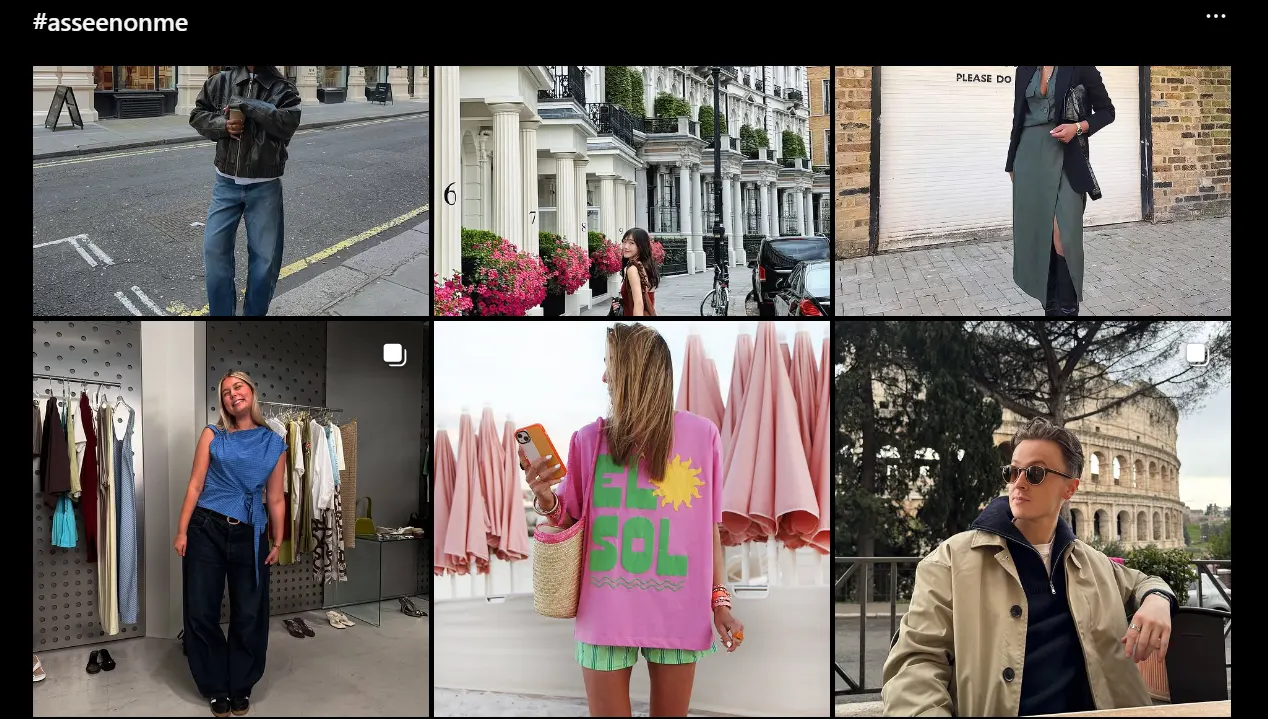
They came up with a simple hashtag, #AsSeenOnMe.
But here’s the magic trick– they didn’t just re-post the pictures to their Instagram. That’s beginner stuff. Instead, they embed those real customer photos directly onto the sales pages.
For instance, you’re looking at a shirt, and right below the perfect studio shot, you see ten different people of all shapes and sizes wearing it in their kitchens, at a party, on vacation. It instantly removes the risk.
The guesswork. You see it. You get it. You buy it.
The lesson here?
Stop hiding your customer photos on social media. Put them right where the money is–your product pages. Landing pages are where the real click occurs. Let real people be your sales team. They’re better at it, anyway.
2. Aerie (US): The Brand That Stopped Faking It
Aerie sells underwear. An industry that is famous for a single, unattainable body type. So Aerie did something off the charts. They stopped airbrushing their models. All of them.
What they did that worked:
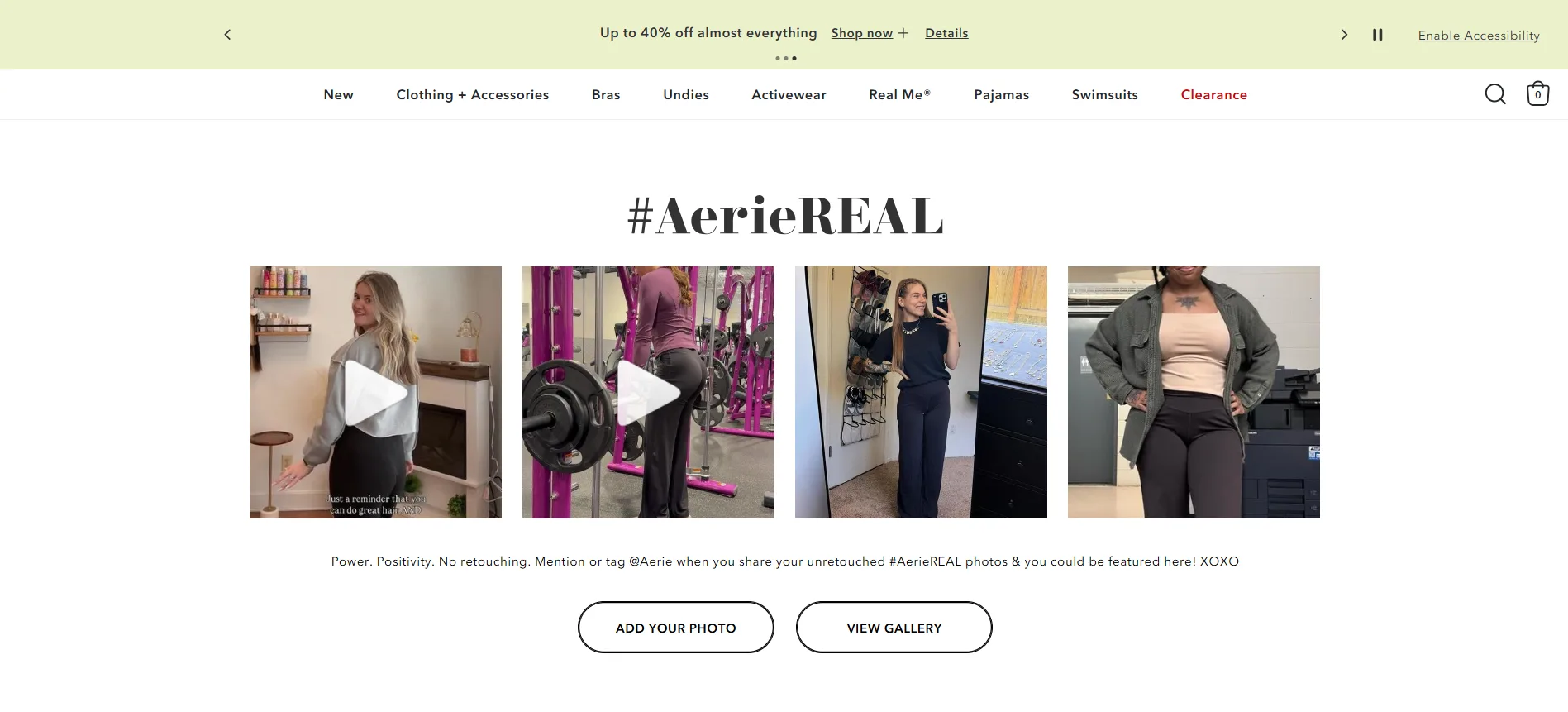
The birth of #AerieREAL. It was more than a hashtag. It was a permission slip for people to be themselves.
And it exploded. Why?
Because they tapped into a real feeling. Bringing people out from the shackles of body dysmorphia. Aerie gave them a banner to rally under. People started posting not just to show off a cute bralette, but to join a cause. It became a statement.
And Aerie put those real customer statements on everything from their website to massive billboards, promoting body positivity and authenticity for their brand.
The lesson here?
Try to tap into the real emotions of customers. When it comes to Fashion, body image issues are the trail-alongs. And when you remove those walls of shame, you become a movement. And that’s when people join in with you.
3. Gymshark (UK): More Like a Cult Than a Clothing Brand
How did Gymshark go from a garage in the UK to a global beast? They didn’t sell clothes. They sold an identity. They understood that for gym rats, what they wear is a badge of honour.
What they did that worked:
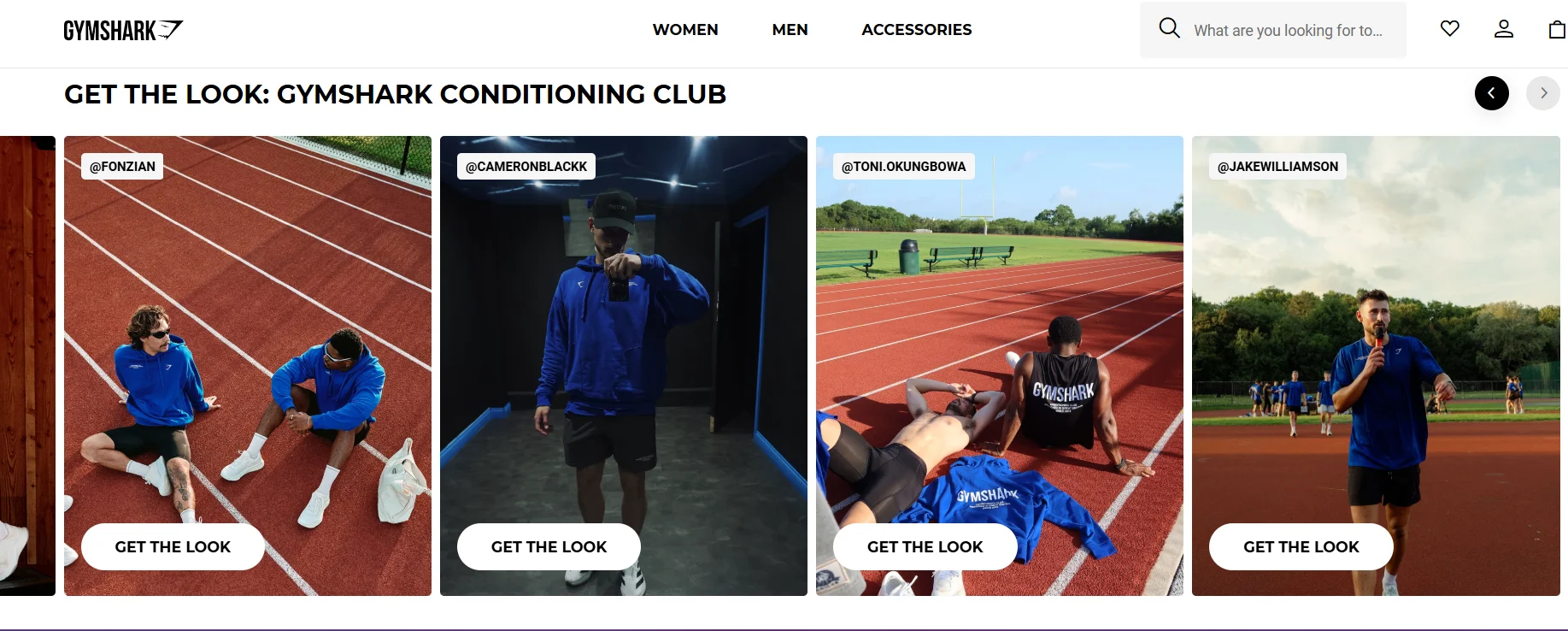
They created an army. At first, they sponsored a handful of dedicated fitness creators who felt like one of the tribe. Relatable, but aspirational. This lit a fire. Suddenly, everyone wanted to be a #Gymshark athlete.
The hashtag became a living feed of personal records, body transformations, and workout selfies. Gymshark just pours gas on that fire by constantly shouting out its members, making everyone feel like they’re part of the inner circle.
The lesson here?
Don’t just sell a product, sell a belonging. Build your own little world with its own heroes and its own language. If people feel like they’re part of a team, they’ll wear the uniform with pride.
4. Reformation (US): Too Cool to Even Ask
Reformation is that girl who looks amazing without trying. Their whole vibe is sustainability meets effortless style.
Their UGC strategy? It’s just as effortless.
What they did that worked:
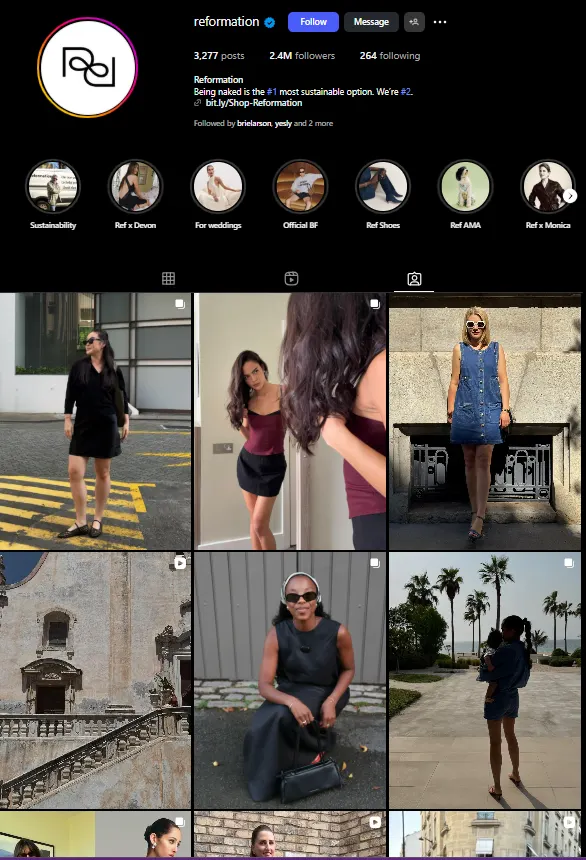
They hit it off by making stuff that people are desperate to show off.
For instance, a “Ref” dress is an event. It’s the dress you wear to a wedding. The one you pack for that trip to Italy. So people are already taking and posting amazing photos in their clothes. It makes the brand feel less like a store and more like the collected photos of your coolest friend.
The lesson here?
Make your product the marketing. If you build a brand with a super-strong, undeniable identity, your customers will do the heavy lifting. Their desire to be part of your world is all the incentive they need.
5. Lucy & Yak (UK): They Built a Family
Lucy & Yak is all about colour, comfort, and good vibes. They make fun clothes, and they’ve built a fan base that is ridiculously loyal and engaged.
What they did that worked:
They have built a community, the “Yak Pack,” and they actually treat them like a pack. They’ll hop on Instagram and ask which colour they should produce next. They’ll feature the people in their factories.
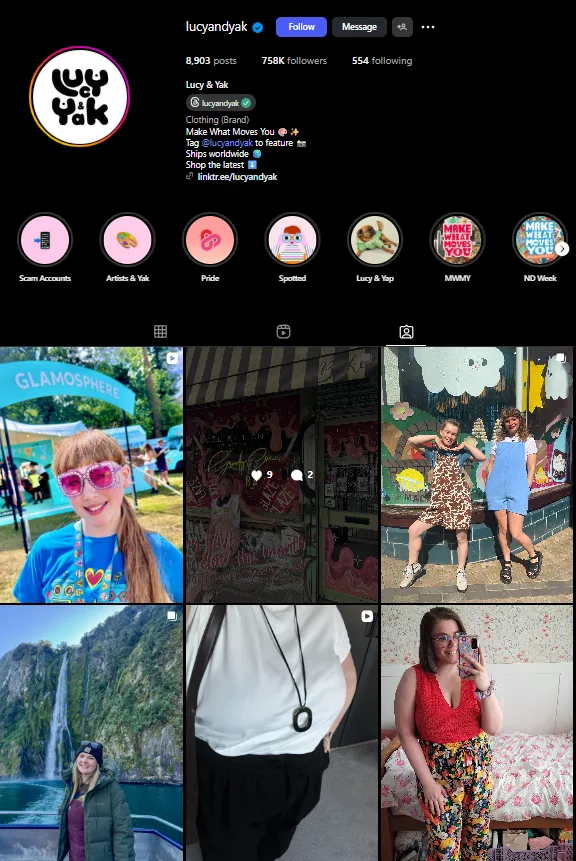
The #LucyAndYak tag isn’t just a marketing tool. It’s a community bulletin board, covered in the bright, joyful, and creative ways people wear their clothes. It’s a two-way street. Always.
The lesson here?
Open the door and connect with your people. Ask their opinion through Insta Q&A. Show them you’re listening. Make them feel included in the brand building. When they feel they’re the real deal, they’ll be your loudest cheerleaders.
Conclusion:
No Shortcut, Just Be Authentic
So, there you have it again. The grand “secret” to killer UGC isn’t a secret at all.
It’s about having a product people genuinely love. It’s about building a community around a shared idea. And most of all, it’s about getting out of the way and letting your awesome customers tell your story for you. Their voice is more believable than yours will ever be.
Stop trying to manufacture perfect moments. Start celebrating the real ones.